Quick Verdict: Ryan Fox shot 62 in the third round at Royal Birkdale, matching the lowest score ever recorded in a men’s major and moving into a share of the Open lead. On the same day, Rory McIlroy ripped Bryson DeChambeau’s reaction to a two-shot penalty, calling it “performative” and accusing him of holding up the championship.
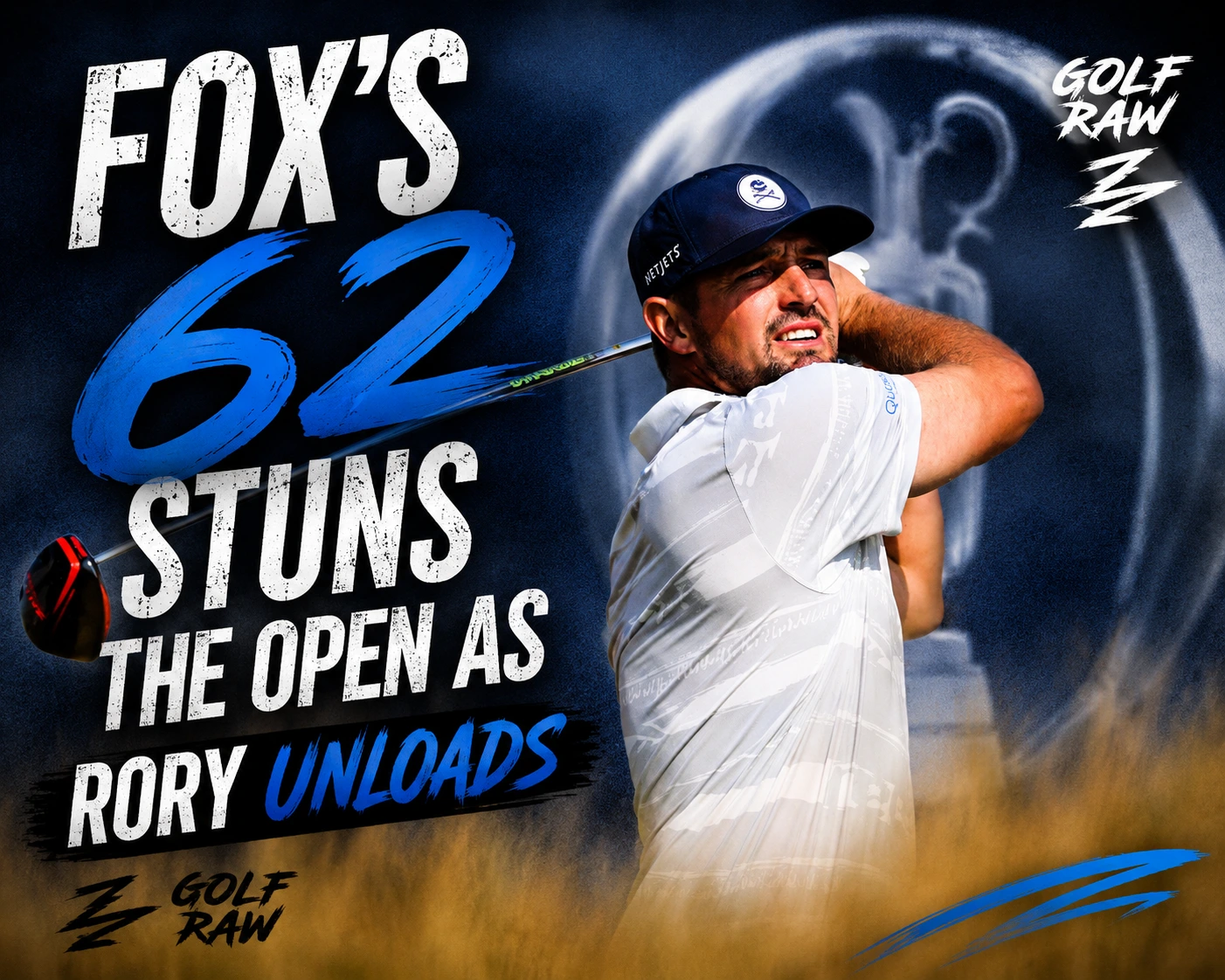
How did Fox shoot 62?
Ryan Fox carded a historic 8-under 62, combining nine birdies with a single bogey to vault into the co-leadership of the Open Championship.
The New Zealander played a clinical round that saw him reach the turn in a spectacular 5-under 29. Exploiting the calm morning conditions at Royal Birkdale, Ryan Fox hit fairways consistently, set up aggressive approaches, and putted with absolute conviction. The scoring run highlights how scoreable a major venue becomes when the wind drops, allowing elite players to pivot from survival mode to attacking flags.
He had a distinct opportunity to stand alone in the record books on the par-5 18th. Although his long birdie attempt fell just short of the cup, his par tap-in cemented a historic 62, matching the scoring milestone on one of the most demanding links courses in the world.
What record did Fox match?
Fox's 62 matched the lowest 18-hole score recorded in a men’s major championship, making him the third player to achieve this mark during this single tournament week.
This tournament has witnessed an unprecedented scoring barrage. Fox's round follows the co-record-setting 62s posted by Lucas Herbert and Sam Burns during Friday's second round. Before this week, Branden Grace held the exclusive record of carding the first 62 in a men's major, established during the third round of the 2017 Open at this exact venue.
That Royal Birkdale—a course historically feared for its deep pot bunkers, penal fescue, and demanding wind angles—now claims four of the eight lowest rounds in men's major history is a statistic that borders on the absurd. When the elements relent, the modern field shows no hesitation in picking the venue apart.
| Player | When | Score | Why it matters |
|---|---|---|---|
| Branden Grace | 2017 Open, Round 3 | 62 | First 62 in men’s major history. |
| Lucas Herbert | 2026 Open, Round 2 | 62 | Matched Grace’s mark. |
| Sam Burns | 2026 Open, Round 2 | 62 | Joined Herbert later that day. |
| Ryan Fox | 2026 Open, Round 3 | 62 | Reached a share of the lead. |
Why was Birkdale vulnerable?
A calm morning session temporarily neutralized the course's defenses, creating a clear scoring window for the early groups.
Fox noted after his round that calm morning conditions at Royal Birkdale introduce a unique kind of pressure to produce a low score. The field understands that when the wind dies down, the links cease to dictate absolute survival. If a player fails to take advantage of these lulls, they quickly fall behind as precision ball-strikers attack the greens.
Many players fail to capitalize on quiet mornings due to minor errors—leaving wedges short, missing readable putts, or chasing flags from poor angles. Fox avoided these mistakes, scoring early and frequently before the afternoon breeze returned to restore the course's defenses.
What did Rory say?
Rory McIlroy launched a direct critique against Bryson DeChambeau, describing his post-penalty behavior as performative and disruptive.
Speaking after his third round, Rory McIlroy stated clearly that he is not fond of DeChambeau and views much of his public reaction as a performance for attention. McIlroy criticized the lengthy process that followed the ruling, arguing that DeChambeau held the tournament hostage by dragging out the dispute late into Friday evening.
Tour professionals rarely voice such blunt assessments, typically choosing to deflect conflict with boilerplate statements. McIlroy's comments underline his impatience with the spectacle, insisting that players should accept rulings promptly without turning technical infractions into prolonged public debates.
Why was DeChambeau penalized?
DeChambeau was assessed a two-stroke penalty for inadvertently improving the area of his intended swing on the par-4 fifth hole.
The rules infraction occurred during the second round when Bryson DeChambeau played his second shot from deep fescue. R&A officials reviewed the footage and determined that his actions had improved the lie, in violation of Rule 8.1. Under this rule, a player's intent is irrelevant; the physical change to the swing path constitutes the infraction.
McIlroy mentioned that he saw the broadcast footage from the players' lounge and immediately recognized the violation. The penalty turned a bogey five into a triple-bogey seven, adjusting DeChambeau's second-round score to a 68 and removing him from the final Saturday grouping of the Open Championship.
| Moment | What it meant |
|---|---|
| DeChambeau’s second shot at No. 5 | Officials determined the intended swing area had been improved. |
| R&A decision | Two-stroke penalty. |
| McIlroy’s response | He called DeChambeau’s later reaction “performative.” |
The Raw Take
Fox did the difficult thing properly. A calm morning showed up, and he took every ounce of golf it offered. No drama. No argument. Just a 62 and a share of the lead.
DeChambeau had every right to be angry about a brutal penalty. He did not have the right to make his anger the main event. McIlroy saw the difference, and he said it with both feet planted.