
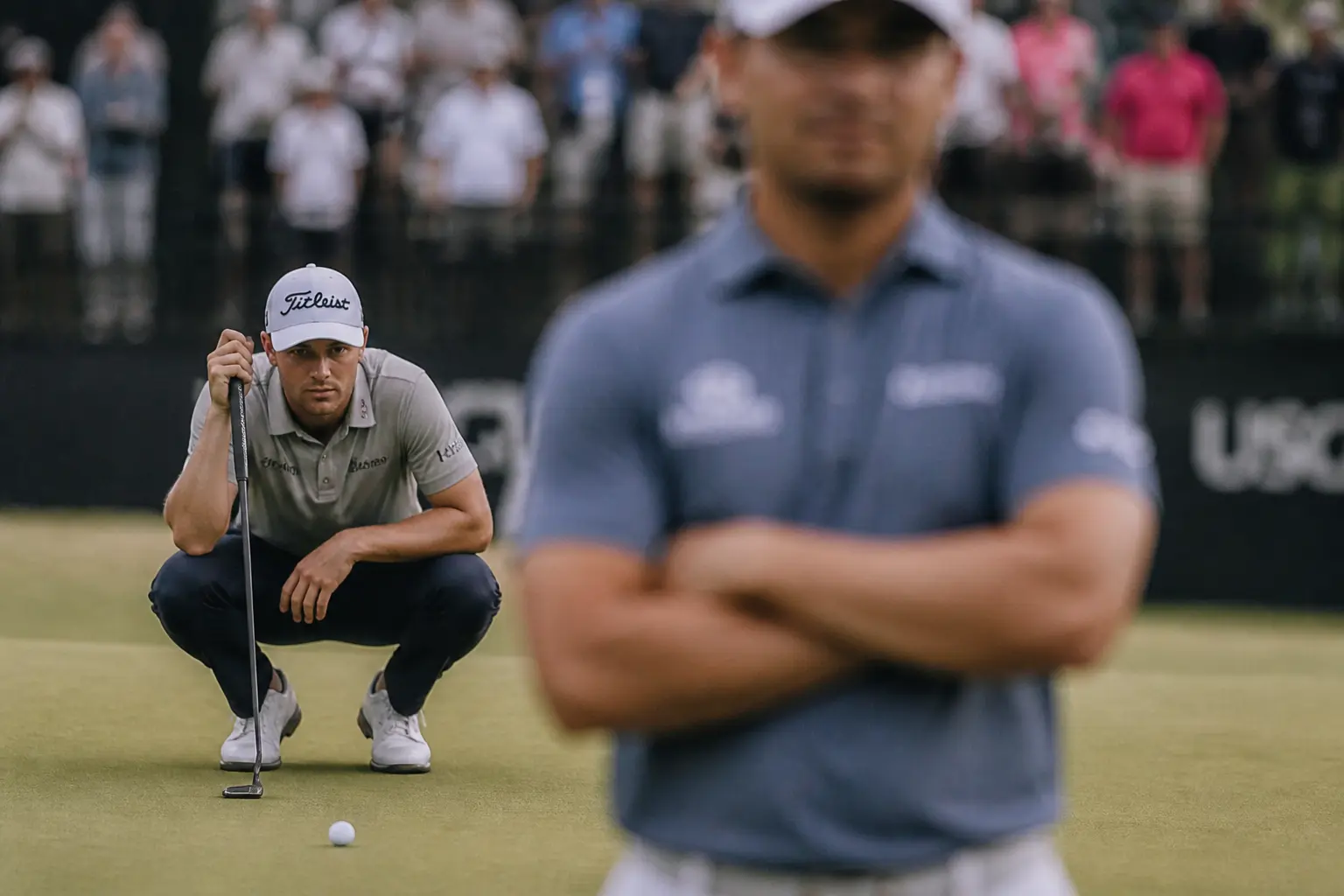
Let's start with the facts. The WGC-Dell Technologies Match Play — the only full-field match play event the PGA Tour runs — has never once been cited by a top-10 world-ranked player as their favourite event on the schedule. Ask them off the record why and the answer is always a variation of the same thing: you can't control it.
In stroke play, excellence over 72 holes is almost always rewarded. The math is ruthless and fair. Hit it close enough, long enough, often enough — the trophy finds you. Match play removes the math and replaces it with psychology, momentum, and the specific discomfort of watching the guy across the tee stare at you after draining a 40-footer to go 2-up with three to play.
The question of which format "exposes the frauds" is actually two separate questions: which format reveals genuine skill differences, and which format creates the better spectacle. The answers are not the same.
The Formats, Explained
Stroke Play
- Every shot counts toward a total score across all 72 holes
- You compete against the entire field simultaneously
- A triple-bogey on hole 3 hurts — but you play on and recover
- The better golfer wins most of the time over four rounds
- Used in all four majors and virtually every PGA Tour event
Match Play
- Each hole is its own contest — win the hole, win a point
- You compete directly against one opponent at a time
- A triple-bogey only costs you that one hole — move on
- An upset can happen on any given day against any opponent
- Used in the Ryder Cup, Presidents Cup, and WGC Match Play
Why the PGA Tour Is Terrified of Match Play
The WGC Match Play used to be a marquee event. For a brief window in the early 2000s, it was genuinely appointment television — Woods against somebody, 18 holes, sudden death pressure, one wrong read ending a week. And then, slowly, the tour found ways to dilute it. The field expanded. Group stages were added. Byes were introduced. The format that scares television executives — the possibility that the best player in the world gets sent home by Tuesday afternoon — was systematically buried under administrative scaffolding.
Here's what the data says about that fear: in match play, the world number one wins the event roughly 8% of the time when brackets are drawn. In a 72-hole stroke play event, the world number one finishes in the top 3 roughly 31% of the time. The format doesn't just create upsets — it manufactures them structurally. That's not a bug for a sports fan. It's absolutely a bug for a world number one trying to justify their world number one status.
The psychology is completely different
Stroke play is a competition against a number. You look at the leaderboard, you calculate what you need, you execute a game plan. The course is the opponent. In match play, a human being with a heartbeat and a competitive instinct is standing 10 feet to your left on every tee box. They birdie the par-5 you just bogeyed. Suddenly you're 3-down and the math of the day has gone from manageable to desperate. No leaderboard tells you that feeling. No Strokes Gained stat captures it.
Hot putting streaks become weapons
We've written before about how Strokes Gained: Putting has the weakest year-to-year correlation of any SG category. In stroke play, a player on a hot putting week is a threat but ultimately reverts to mean. In match play, a player making everything for four days in a row can beat players ranked 80 spots above them. The format amplifies short-term variance rather than smoothing it out. Whether you see that as a problem or a feature defines your preference between the two formats.
"Match play is not about being better. It's about being better today, against this person, on these 18 holes."
Which Format Exposes the Frauds?
The honest answer is: neither, and both, depending on what you mean by "fraud."
Stroke play is the better meritocracy over time. A large sample of 72-hole events tells you, with remarkable accuracy, who the best golfers in the world are. Strokes Gained data, which requires large samples to be meaningful, works because stroke play generates enough repetitions to separate signal from noise. You cannot fake a low handicap across 100 competitive rounds. Stroke play exposes the frauds over a season.
Match play, however, exposes a different kind of fraud: the player who is technically excellent but mentally fragile. There are documented examples of players who rank inside the top 20 in the world by strokes gained metrics and yet carry career match play records below .500. Against the abstract opponent of a leaderboard, they are elite. Pressed into the specific, unforgiving social environment of a head-to-head bracket, something in them breaks. Match play exposes that fraud — and does it in public.
The Ryder Cup is the truest test
The clearest argument for match play as an exposure mechanism is the Ryder Cup. Every two years, the top 12 players from the US and Europe are stripped of their individual rankings and forced to compete in foursomes, fourballs, and singles — all match play formats. The results have produced outcomes that stroke play records simply cannot predict. Players who underperform in major championships repeatedly deliver under Ryder Cup pressure, and vice versa. The format is a different instrument, measuring a different thing. Both readings are real.
The GolfRaw Verdict
The debate is a false binary. Stroke play is the superior format for determining the best golfer in the world over time. It produces the most statistically reliable outcomes, rewards consistent excellence across four days, and is correctly used in all four majors. If you want to know who is genuinely the best player on the planet across a career, stroke play is the answer.
Match play is the superior format for entertainment, character revelation, and the specific thrill of watching world-class golfers navigate pure head-to-head pressure. The PGA Tour's gradual erosion of its only match play event is a commercial mistake dressed up as administrative housekeeping. Bring back the raw bracket. Let the number one seed go home on Tuesday. That's the show. There is more on that in 6 and 5 on Thursday. Beaten on the 19th on Friday.
As always: the scorecard doesn't care about your excuses. Neither does your opponent.