
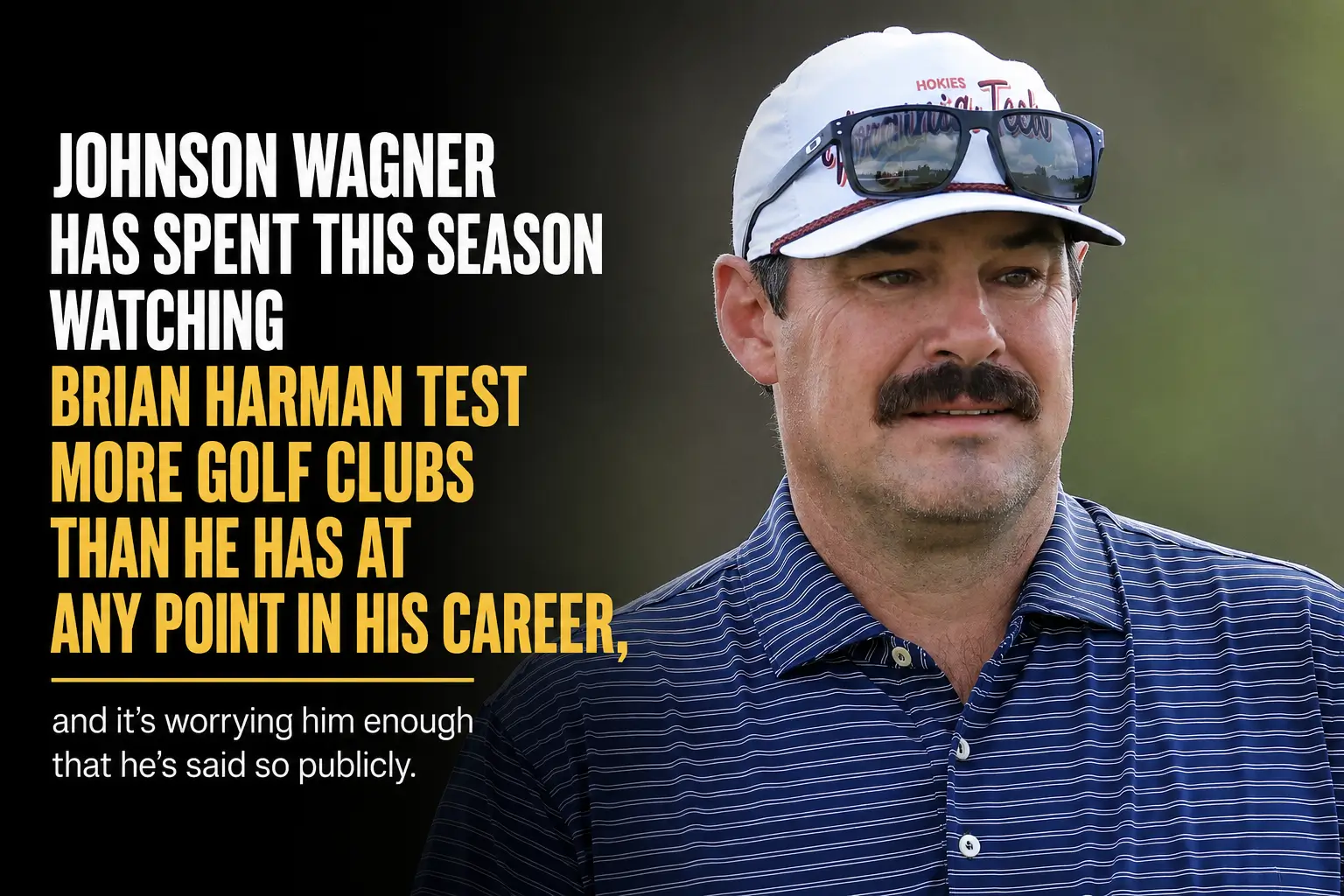
Quick summary: Facing a must-advance scenario on the FedExCup top-50 bubble, major champion Brian Harman finds himself in the crosshairs of television analyst Johnson Wagner, who urged him to abandon his ongoing carousel of experimental putters. Harman's season-long flatstick struggle mirrors a classic trap that snared Brooks Koepka—while Scottie Scheffler provided the ultimate blueprint for escaping it.
The Three-Player Putting Pattern
Harman enters the final round at TPC Southwind tied for sixth, projected 51st in the FedExCup standings—one agonizing spot outside the BMW Championship and 2027 signature-event exemptions. After winning the 2023 Open Championship and reaching East Lake in 2025, his 2026 campaign has produced just a single top-10 finish amid constant equipment changes.
This is the third high-profile manifestation of this slump pattern in two weeks:
- Brooks Koepka: Ranked 8th on Tour in strokes gained approach while ranking 116th in putting, cycling through prototypes before missing the playoffs entirely.
- Brian Harman: Historically one of the Tour's deadliest putters, experiencing the worst putting numbers of his career and constantly swapping equipment.
- Scottie Scheffler: The sole counter-example—taking 33 putts for a 68 on Thursday before firing a record-tying 61 on Friday with 13 one-putts, changing nothing about his setup or stroke.
"When you're searching with four different putters in six weeks, you aren't fixing a stroke—you're feeding doubt."
Why the Putter Takes the Blame
Unlike full-swing faults where mechanical breakdowns are measurable and coachable, putting motion is tiny and binary. When putts slide past the cup, golfers rarely have an obvious mechanical culprit, making the equipment in their hands the only variable they can immediately replace.
Every equipment swap resets tactile feel and stroke timing, accelerating the loss of confidence. Wagner's recommendation—return to what worked—is difficult precisely because it requires admitting the search itself was the underlying issue.
The Reality of Distance Control
PGA Tour players maintain a 99.42% conversion rate from three feet and 70.98% from six feet, with average lag putts settling 2 feet 4 inches from the hole. For amateur golfers, eliminating three-putts by managing first-putt proximity from 30 feet yields far greater scoring improvements than buying new equipment.
Frequently Asked Questions
What did Johnson Wagner say about Brian Harman?
Wagner expressed concern over Harman testing an unprecedented number of clubs this season and publicly advised him to return to his trusted old putter.
Where does Brian Harman stand in the FedExCup?
Harman sits tied for sixth at TPC Southwind, projected 51st in the standings—one spot shy of advancing to the BMW Championship.
Why do golfers change putters when slumping?
Because putting motion is subtle and binary, players cannot easily pinpoint swing flaws, making the club itself the easiest external element to alter.
How can golfers effectively fix three-putting?
Focus on first-putt proximity from 30 feet and beyond. Reducing lag distance to inside three feet eliminates the vast majority of three-putts without requiring an equipment change.
The Raw Take
Equipment changes often disguise psychological uncertainty. Scheffler's 61 proved that putting variance balances out when the stroke remains constant, while Koepka and Harman show how endless searching deepens a slump. In putting, trusting the tool you know is almost always better than looking for magic in a new one.