
Key takeaways
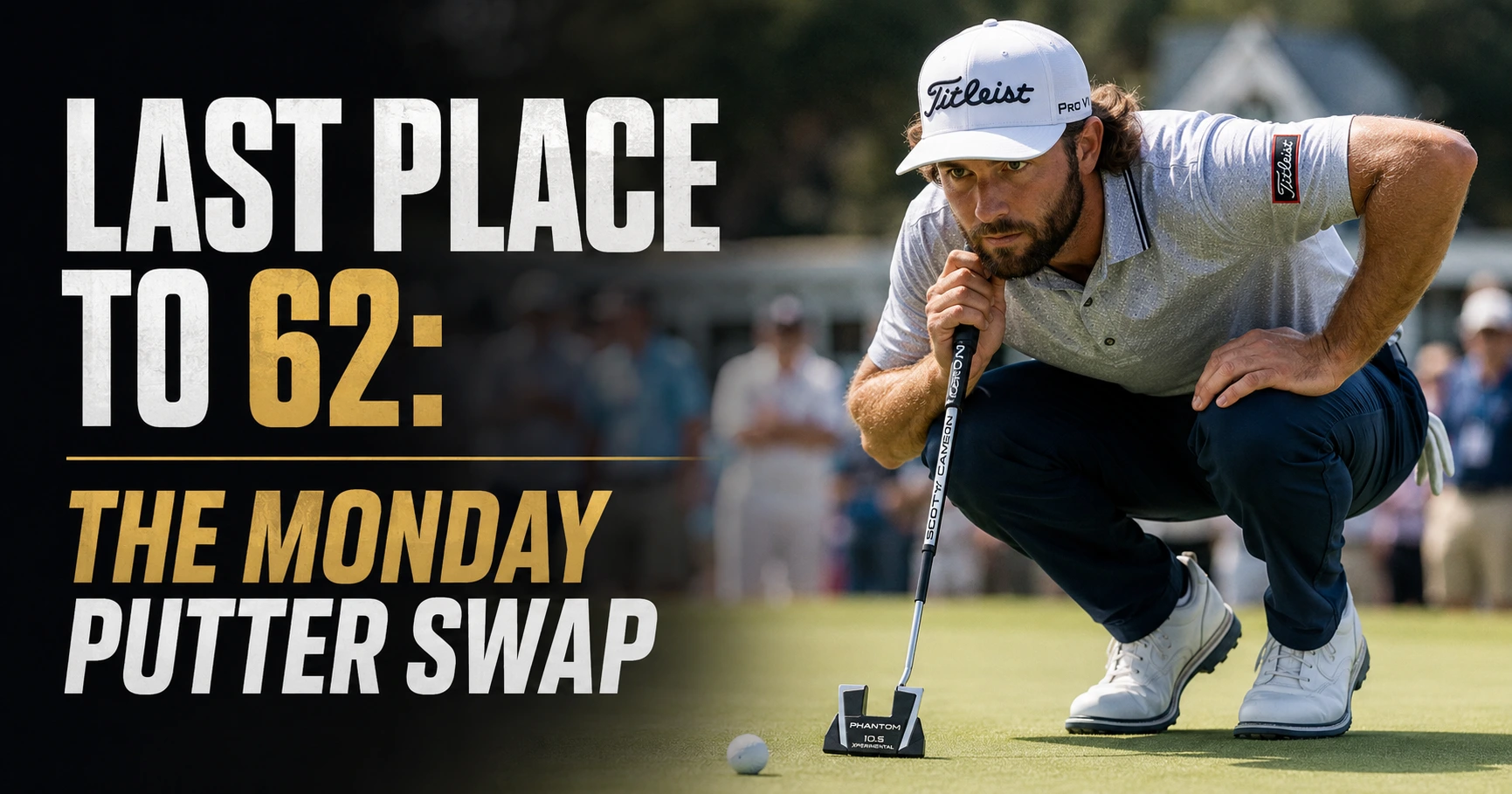
- Cameron Young benched his Phantom 9.5R Tour Prototype on Monday and put a Scotty Cameron Phantom 10.5 Xperimental Prototype in play.
- His putting rank slid from the top 10 in strokes gained putting to outside the top 100, with losses in five of his last eight events.
- The answer arrived as a solo 62: seven birdies, 13 fairways, 14 greens and nearly four strokes gained on the greens.
- Four of the seven birdies came from outside 10 feet, and he finished with an eagle putt from about 40 feet.
- J.J. Spaun’s withdrawal left Young alone, giving him an uninterrupted pace that can matter when a new look is still settling.
Young did not find a magic putter. He changed one visible variable and then putted like a player who trusted what he saw. The new Scotty Cameron Phantom 10.5 Xperimental Prototype arrived on Monday. By Friday at East Lake, Young had shot a solo 62 and gained nearly four strokes on the greens.
The useful comparison is in Hovland’s co-leader story and our Friday winners-and-losers recap: the equipment switch is part of the tournament story, not a substitute for one.
What changed in Cameron Young’s bag?
Young benched his Scotty Cameron Phantom 9.5R Tour Prototype on Monday and moved to a Phantom 10.5 Xperimental Prototype. The names sound close because the heads live in the same mallet family, but the look at address, neck, alignment lines and balance can feel completely different.
This was not the first test. Young had tried the 10.5 shape at the Travelers before returning to his gamer. The Monday change suggests a deliberate re-test under tournament pressure, not an impulse purchase. A prototype can change the picture the player sees without changing the stroke he has spent years building.
| Metric | Result | Why it matters |
|---|---|---|
| Score | 62 | Solo low round and a move to 8 under. |
| Birdies | 7 | Four came from outside 10 feet. |
| Fairways | 13 | Plenty of playable approaches. |
| Greens | 14 | Two-thirds of the card reached in regulation. |
| Putting | Nearly +4 strokes | The immediate difference after the switch. |
How bad was the putting slump?
Young fell from the top 10 in strokes gained putting to outside the top 100. He also lost strokes on the greens in five of his last eight events. That is not one cold weekend; it is a pattern large enough to make a Monday equipment test reasonable.
Still, the ranking is context, not a diagnosis. Strokes gained is an outcome stat. It tells us the putts were costing him relative to the field; it does not tell us whether the cause was aim, start line, speed, face control or confidence. The new head may have changed the first two feet of the ball’s journey. We cannot claim it repaired the whole stroke.
What did the solo 62 actually contain?
Seven birdies, 13 fairways and 14 greens is a complete round, not a putting-only fluke. Four birdies came from outside 10 feet, and the closer was an eagle putt from about 40 feet. Those are the details that turn “new putter” from a headline into a testable performance story.
The last putt matters because it came after the score was already moving. Young was not simply hanging on to a low number. He kept making committed swings and then rolled in the putt that closed the round. That is confidence showing up after the work, not proof that the prototype will behave the same way next week.
Did playing alone give Young an edge?
J.J. Spaun’s withdrawal left Young as a single. There was no partner to wait for, no borrowed read and no conversational pause between shots. That uninterrupted pace can be an edge when a player is trying to learn a new sight picture, especially on fast greens.
It can also expose a player. There is no group rhythm to hide behind and no one else’s routine to copy. Young’s 62 proves he handled the quiet. It does not prove that playing alone caused the score; the new putter, the ball-striking and the day’s reads all traveled together.
What does the USGA and R&A say about changing clubs mid-round?
Rule 4.1b: the equipment audit
- Fourteen clubs is the cap. A player may start with fewer and add clubs during the round, but not in a way that delays play or brings the bag above 14.
- Replacement is limited. A lost or damaged club cannot simply be swapped because the player dislikes it. Replacement depends on how the damage occurred and must not delay play; a club damaged by abuse generally cannot be replaced.
- The penalty is real. Carrying too many clubs brings the general penalty: two strokes per hole in stroke play, capped at four strokes, or loss of hole in match play, capped at two holes. The excess club must be declared out of play.
Young’s Monday switch happened before the round, so Rule 4.1b is a guardrail, not a scandal. The amateur takeaway is simple: test the club before you tee off, count the bag, and do not treat a mid-round replacement as a free reset.
Which four equipment myths need binning?
Myth check
- Myth 1: a mid-season swap means panic. A controlled change can isolate a problem. The test is whether start line and speed improve, not whether the calendar says August.
- Myth 2: retail and tour prototypes are identical. They may share a name while differing in head weight, neck, finish, alignment and tolerances. A prototype is not automatically a better retail buy.
- Myth 3: spending more fixes visual alignment. Price does not make a head sit correctly for your eye. Fit, loft, lie, length and the picture at address matter more than the invoice.
- Myth 4: a putter swap requires a new stroke. Young’s round is not evidence of a complete overhaul. A player can change the tool, keep the motion, and learn what the new face asks for.
What can an amateur actually copy?
Do not chase the exact Phantom 10.5 Xperimental Prototype. Start with Young’s process: name the miss, change one variable, test it before competition and keep a number that can argue with your feelings. For a putter, that means recording start line, distance control and short-putt make rate across several sessions.
If the head changes the way you aim, that is useful information. If it only looks expensive, it is decoration. The best equipment change is the one that gives you a clearer decision before the stroke and a cleaner review after it.
Verification block
Supplied for this piece: Young’s Phantom 10.5 Xperimental Prototype switch on Monday; the benched Phantom 9.5R Tour Prototype; the earlier Travelers test; the move from top 10 to outside the top 100 in strokes gained putting; losses in five of the last eight events; seven birdies with four from outside 10 feet; 13 fairways; 14 greens; a closing eagle putt from about 40 feet; nearly four strokes gained putting; Spaun’s withdrawal; and the Rule 4.1b audit.
Not verified: the prototype’s exact loft, lie, head weight, length, grip, retail equivalent or the precise fitting changes made at Travelers. We also do not claim the switch alone caused the 62.
The Raw Verdict
Young changed the putter on Monday and shot 62 on Friday. That is a strong signal, not a lifetime warranty. The sharper fact is that his slump had become measurable: top 10 to outside the top 100, losses in five of eight events, then nearly four strokes gained in one round.
Copy the experiment, not the purchase. A tour prototype can change the picture, but the golfer still has to read, aim, strike and own the pace. Young did all four for one unusually clean afternoon.
Frequently Asked Questions
What putter did Cameron Young switch to?
Young switched to a Scotty Cameron Phantom 10.5 Xperimental Prototype, benching his Phantom 9.5R Tour Prototype.
How bad was Cameron Young’s putting slump?
He fell from the top 10 in strokes gained putting to outside the top 100 and lost strokes in five of his previous eight events.
What did Cameron Young shoot at East Lake?
Young shot a solo 62 with seven birdies, 13 fairways and 14 greens, then closed with an eagle putt from about 40 feet.
Why did Young play his round alone?
J.J. Spaun’s withdrawal left Young as a single, giving him an uninterrupted pace around East Lake.
Can amateurs buy the same putter prototype?
Not necessarily. Tour prototypes can differ from retail models in head, neck, weight and finish, so the useful copy is a fitting process, not a promise of identical equipment.
Sources
- GolfRaw: Hovland shares the 36-hole lead. East Lake leaderboard context.
- GolfRaw: Friday winners and losers. Round-two tournament recap.
- GolfRaw: PGA Tour desk. Player and equipment context.
- GolfRaw: Tournament coverage. East Lake scoring and event context.
- GolfRaw: Golf rules and guides. Rules reference pathway for Rule 4.1b.
- GolfRaw search. Search the archive for putter testing and strokes-gained coverage.
How we reported this. GolfRaw Editorial separated the supplied equipment details and performance numbers from interpretation. The verification block names the unknown prototype specifications and avoids claiming that one club caused an entire round.
Author. GolfRaw Editorial is GolfRaw’s golf news and verification desk.
Corrections. None at publication. Corrections policy.
Last updated. .