
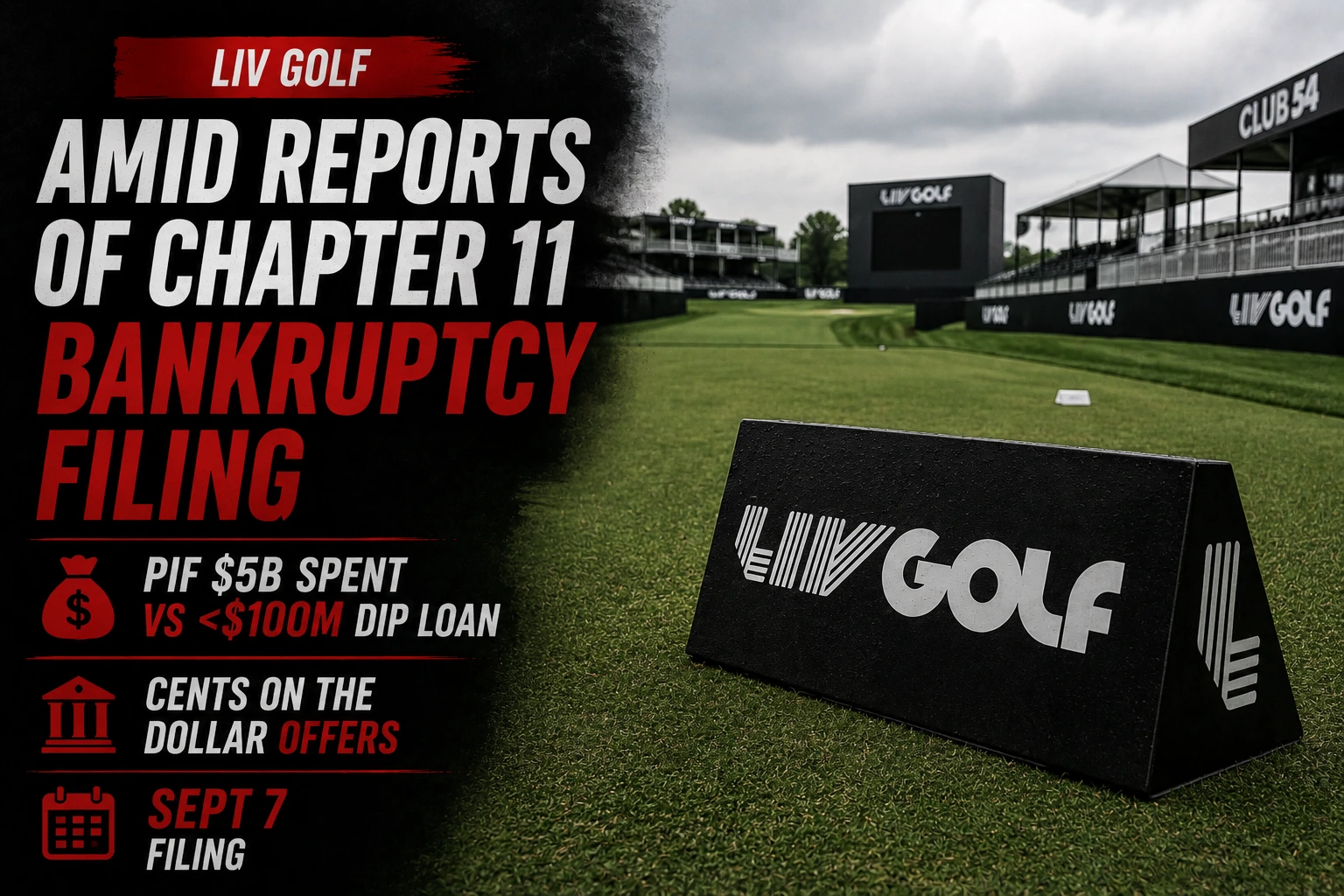
Key Takeaways
- Not a Liquidation: A potential Chapter 11 filing is a restructuring maneuver designed to hand the league over to the players, not a Chapter 7 liquidation.
- The Unsecured Creditor Trap: Players refusing settlements will join vendors as unsecured creditors, waiting in line behind PIF's DIP financing.
- LIV 2.0 Vision: The new equity-driven cooperative model aims for ~10 global events, open tour cross-participation, and resolving ongoing DP World Tour/PGA Tour sanction conflicts.
LIV Golf Restructuring vs Original Structure
| Metric | Original Structure (2022-2026) | Post-Bankruptcy "LIV 2.0" |
|---|---|---|
| Funding Source | Cumulative PIF Funding ($5B+) | Debtor-in-Possession Loan (<$100M) |
| Player Compensation | Guaranteed multi-year cash contracts | "Cents on the dollar" settlement + Equity |
| Schedule & Freedom | 14 closed, mandatory events | ~10 global events + open tour cross-participation |
| Corporate Governance | PIF-operated, top-down league | Player-controlled equity cooperative |
Auditing the Chapter 11 Reports
Recent reports from the Financial Times and Reuters indicate LIV Golf is preparing a Chapter 11 bankruptcy filing in a New Jersey federal court, potentially as early as the week of September 7. Currently unverified with no official comments from LIV executives or PIF representatives, the filing is widely misunderstood. It is crucial to separate the headlines from the legal reality: this is not a shutdown.
A Chapter 11 bankruptcy is a corporate restructuring mechanism. In LIV's case, it serves as the legal vehicle to formally sever the original, unsustainable financial structure backed by $5 billion from the Public Investment Fund (PIF) and transition the entity into a player-owned cooperative.
The Player Dilemma & Unsecured Creditor Trap
The impending filing forces LIV’s roster into a brutal legal dilemma. The guaranteed multi-year contracts that lured players away from the PGA Tour are about to be shredded in bankruptcy court. Players essentially have three options:
- Settle and Join LIV 2.0: Accept a "cents on the dollar" cash settlement for their remaining contracts in exchange for equity in the newly restructured league.
- Settle and Exit: Take the reduced settlement payout and leave the ecosystem entirely, attempting to return to legacy tours.
- Reject and Sue: Refuse the settlement and fight it out in court. This is the "Unsecured Creditor Trap." By suing, players join aggrieved vendors at the back of the line, waiting behind PIF, who will likely secure priority status through Debtor-in-Possession (DIP) financing.
Inside "LIV 2.0" and the Sanction Standoff
If the restructuring succeeds, "LIV 2.0" aims to operate roughly 10 global events with a significantly reduced overhead. The ultimate goal of this player-owned equity model is freedom—specifically, open tour cross-participation. However, this vision immediately collides with the ongoing DP World Tour sanction threats and the PGA Tour's strict returning restrictions.
As Scottie Scheffler continues his historic dominance on the PGA Tour, the window for LIV stars to return remains fraught. PGA Tour executives, including Brian Rolapp, have maintained a hardline stance. For players like Brooks Koepka, the legal restructuring of LIV might be their only path to renegotiating access to legacy tour events without crippling fines.
Operational Reality: Layoffs and Lawsuits
The writing has been on the wall for weeks. According to a recent report by Joel Beall of Golf Digest, comprehensive staff layoffs are scheduled to conclude by the first week of September. Additionally, several vendor lawsuits over unpaid production and app development fees have already hit the docket.
The macro timeline reveals the unsustainable burn rate: PIF sank over $5 billion into the project since 2022. Following the April 2026 funding cliff and the disastrous $300 million loss associated with the Asian Tour partnership termination, the original financial model was entirely exhausted.
Fact-Checking 5 Widespread Bankruptcy Myths
- Myth 1: LIV Golf is liquidating and shutting down completely. False. It is a Chapter 11 restructuring, not a Chapter 7 liquidation.
- Myth 2: Players will get all the remaining money on their contracts. False. Contracts will be restructured; players will be offered reduced settlements and equity.
- Myth 3: The PGA Tour orchestrated the bankruptcy. False. This is a direct result of PIF cutting off the funding pipeline due to massive burn rates.
- Myth 4: PIF will lose everything they invested. False. By providing DIP financing, PIF maintains significant leverage and priority debt status during the restructuring.
- Myth 5: LIV players can immediately rejoin the PGA Tour. False. PGA Tour returning restrictions and fines remain firmly in place, complicating any mass exodus.
The Raw Verdict
The restructuring hinges entirely on Jon Rahm's contract leverage. If the highest-paid player accepts an equity settlement, the rest of the roster will likely follow into LIV 2.0. If Rahm fights it, the unsecured creditor queue will become a legal bloodbath.
Frequently Asked Questions
What happens to LIV Golf player contracts in Chapter 11?
Player contracts are treated as unsecured debt. Players will likely be offered a reduced cash settlement combined with equity in the newly restructured league.
Will LIV Golf tournaments still happen in 2027?
If the restructuring is successful, LIV 2.0 plans to operate a reduced schedule of approximately 10 global events.