Quick answer: Golf crowds are getting louder, more partisan, and occasionally hostile because the sport is succeeding at the exact thing it spent years chasing: pulling in mainstream sports fans. Cheaper-to-access energy, alcohol sales, a deliberate push away from the stuffy country-club image, and marquee events in big sports markets have all combined to change who shows up and how they behave. Wyndham Clark getting jeered to a U.S. Open win is not a one-off. It is the clearest sign yet of where this is heading.
You cannot separate this shift from money — as we lay out in detail, sports betting is ruining golf galleries by handing fans a financial reason to turn on the players.
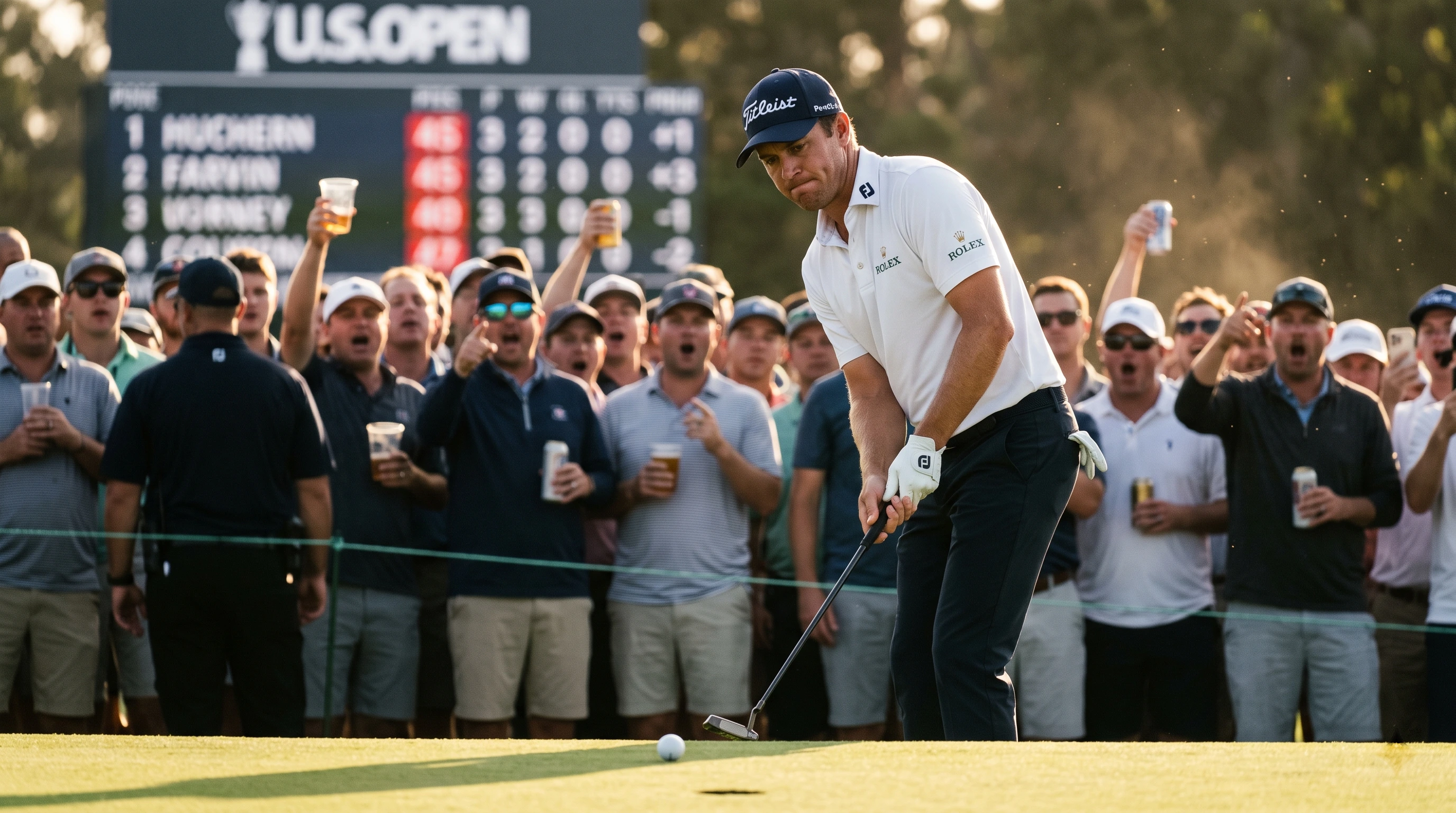
The Acoustic Shift: Real Noise vs. Golf Nostalgia
For most of its history, golf sold itself on silence. The default soundtrack of the game was polite, rhythmic applause, hushed gallery conversations, and marshals lifting "quiet please" paddles like church elders demanding reverence. But that era is officially over. Today, at the biggest events in major sports markets, the silence is fading fast.
The evidence is no longer anecdotal or nostalgic. The 2025 Ryder Cup at Bethpage Black produced some of the ugliest fan behavior American golf has ever seen, with Rory McIlroy subjected to personal abuse all week. Months later, Wyndham Clark spent a U.S. Open Sunday at Shinnecock Hills being actively cheered against, with several spectators ejected by police. These are not isolated incidents or a few "bad apples." They represent a structural change: golf galleries are starting to sound exactly like NBA, NFL, or soccer crowds.
Boos, Beers, and the Quest for the Mainstream
This shift isn't driven by a single villain, but by two powerful forces that reinforce each other.
The Decoupling of Etiquette
First, golf got what it spent the last decade begging for: a younger, broader, more mainstream audience. The sport actively worked to shed its stuffy, elitist country-club image to attract fans who grew up booing at basketball stadiums and tailgating before football games. These new fans did not get the memo on golf etiquette—and frankly, the tournaments invited them in hoping they wouldn't need one.
The Liquid Fuel of Tour Revenue
Second, tournaments are heavily reliant on alcohol sales to drive venue revenue. The all-day-drinking culture of a football stadium has been imported directly to the fairways. Combine a hot summer day, a steady stream of high-priced beer, a partisan crowd, and a sport where fans stand inches from the players, and you have a volatile recipe that produces the exact same results on a golf course as it does at a stadium.
The Stadium Experiment: How Phoenix Blew Up the Rulebook
If you want to trace this trend to its birthplace, look no further than the 16th hole at the Phoenix Open. That par-3 stadium hole, ringed by multi-story grandstands and packed with twenty thousand screaming, drinking fans, was the first place where professional golf openly commoditized crowd noise. Players are routinely booed for missing the green and worshipped for making birdies. Everyone involved agreed to the terms of engagement in advance.
The problem is that the energy of the 16th hole has leaked out of its container. What worked as a fun, controlled novelty in Scottsdale plays very differently when it shows up uninvited on the 72nd hole of a major championship. What was a curated circus has now become the uninvited default.
The Perfect Target: Why Shinnecock Hills Curdled
Wyndham Clark’s U.S. Open Sunday was the perfect storm because Clark handed a primed, beer-fueled New York crowd a perfect villain. Clark came into the tournament carrying baggage: a history of visible on-course outbursts and club-breaking incidents that he had spent the prior year apologizing for. Even before Sunday's final round, Clark admitted he hoped to win fans back.
A gallery already inclined to get loud found its target. When Clark took a six-shot lead into Sunday, the fans didn’t see a feel-good champion. They saw a heel to heckle. They shouted "get in the bunker" on his tee shots, cheered his missed putts, swarmed his errant shots, and fell dead silent when he hit a good one. The mix of New York tribalism, cheap heat, and the new cultural permission to yell created a toxic environment, and Clark simply lit the match by being the man in the lead.
The Double-Edged Sword of Fan Engagement
Is a rowdier gallery good or bad for golf? The answer is both, and the sport cannot have the upside without accepting the risk.
The upside is massive: golf wanted to stop being boring. Packed, passionate, high-energy crowds are excellent for ticket sales, TV ratings, and attracting the next generation of players. By that metric, the new crowd is a triumph.
The downside is the damage left behind when that energy turns sour. A loud, partisan gallery is electric; a crowd cheering a player's collapse while being escorted off the property by state troopers is not. One TV broadcaster openly questioned whether certain markets can continue to host majors if this behavior continues. The very heat that makes the sport feel alive is the heat that threatens to burn it down.
Can the Genie Be Put Back in the Bottle?
Tournaments can try to manage the rowdiness, but they cannot reverse it. The tools at their disposal are blunt: beefing up security, ejecting hecklers faster, or dialing back alcohol sales near the closing holes. As the ejections during Clark's final round proved, these are short-term fixes.
The real challenge is identity. Golf must decide what kind of atmosphere it actually wants. The Phoenix model proves noise can be a premium feature when there is mutual consent. The U.S. Open proves it can degenerate into cruelty when it's forced onto a traditional major stage. Professional golf has ordered a larger, rowdier crowd. Now, it has to live with the bill.
"Professional golf has ordered a larger, rowdier crowd. Now, it has to live with the bill."
The Raw Read
Golf got what it wished for. It spent years desperate to be cooler, younger, and louder, and it succeeded, and now it is living with the consequences. The rowdier crowd is not an invasion. It is the natural result of a sport that opened its doors wide and sold a lot of beer on the way in.
The grown-up way to see the Clark episode is not as a scandal but as a signal. Golf is becoming a mainstream sport, with everything that comes with that—the passion, the volume, the tribalism, and yes, the occasional jerk getting thrown out by police. The job now is not to wish the new fans away. It is to channel their energy somewhere closer to the fun of the Phoenix 16th and further from the spectacle of a man being booed to a major title on home soil. Whether golf can pull that off is the real story. Clark's Sunday was just the loudest possible preview of it.