
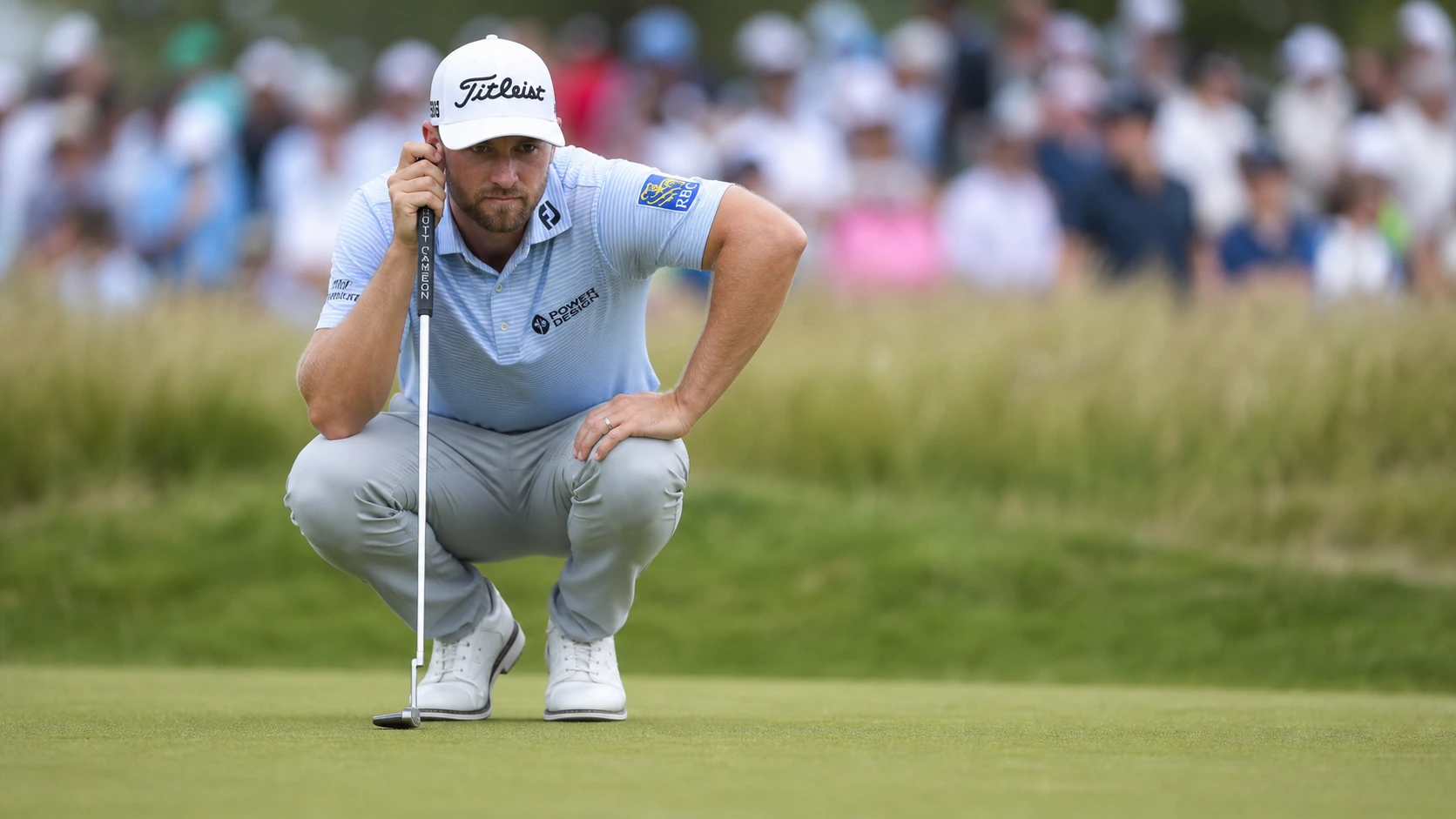
Quick answer: Wyndham Clark shot an even-par 70 on Saturday to push his lead at the 2026 U.S. Open to six strokes after 54 holes. He sits at 7 under, alone at the top, with a four-way tie for second six back at one under. Only two players broke par all day. Clark and world No. 1 Scottie Scheffler will play together in Sunday's final group, and history says this is almost over.
Almost. There is one famous exception, and we will get to it.
How Big Is Wyndham Clark's U.S. Open Lead?
Six shots, and on this golf course that is an ocean.
Shinnecock spent Saturday chewing up the field. The greens firmed, the wind kept blowing, and good players made bogeys in bunches. In all that mess, only two men managed a round under par. Clark was not even one of them, and it did not matter. His even-par 70 looked like a 64 next to what everyone around him was shooting. While the rest of the leaderboard backed up, he just stood still, and standing still was enough to gain ground.
The number that tells the story is seven under. Clark is at seven under for the week. The four players tied for second are at one under. That is the gap.
What Made Clark's Round So Good?
Putting, mostly. Cold-blooded, soul-crushing putting.
On a day when nobody could buy a six-footer, Clark kept rolling them in. The shot that summed up his Saturday came at the 13th, where he drove it into the deep fescue, hit his second into a greenside bunker, blasted out to about 15 feet, and then calmly drained the par putt like it was a practice green. Bogey written all over it. He made par. He did that over and over.
That is what a six-shot lead actually looks like up close. Not fireworks. Not a 64. Just a guy refusing to make the mistakes everyone else is making, and converting the par saves that keep the bleeding to zero. Boring, ruthless, and exactly how you win a U.S. Open.
Can Scottie Scheffler Still Win?
He is the only one with a real shot, and even that is a long one.
Scheffler was the story of the back nine. After a sleepy bogey-bogey start, he caught fire with three straight birdies, including a stunning fairway metal from 274 yards to 13 feet at the par-5 16th, the best shot anyone hit all day. He shot 1-under 69, one of just two red numbers on the board, and it could have been better if he had not missed a three-foot birdie putt on the last.
Here is why it matters more than the score. Scheffler needs this U.S. Open to complete the career Grand Slam, which would make him just the seventh man ever to do it. And Sunday is his 30th birthday, on Father's Day, in the final pairing, chasing the trophy that has always escaped him. You could not write a better setup.
The problem is the math. He is six shots behind the best front-runner in golf, on a course that rewards exactly what Clark is doing. Possible? Yes. Likely? No.
Has Anyone Ever Blown a Six-Shot Major Lead?
Yes, and it is the one thing keeping Sunday interesting.
According to the Elias Sports Bureau, 21 players have taken a lead of six or more shots into the final round of a major. Twenty of them won. One did not. That one is Greg Norman, who led the 1996 Masters by six and somehow lost to Nick Faldo in the most famous collapse the sport has ever seen.
So the odds say Clark wins, and it is not close. But every golf fan watching knows the Norman number is out there. A six-shot lead is supposed to be safe right up until the moment it is not. Clark even has his own history to lean on. He was tied for the lead going into Sunday at the 2023 U.S. Open and closed it out to win. He has done the hard part before.
Who Else Is in Contention?
Honestly, nobody close. But a few names had their moments.
Tom Kim, Sam Stevens, and Sahith Theegala joined Scheffler in the tie for second, all sitting at one under and all needing a miracle and a Clark meltdown to matter. Rory McIlroy gave the crowd a jolt with birdies at the 5th, 6th, and 7th, including a 66-foot bomb that had Long Island roaring, and for a moment he looked like the threat. Then the back nine happened, the same way it has happened to him all week. A 40 on the inward nine, bogeys on five of six par 4s, and a 73 that dropped him out of it.
Xander Schauffele drowned on double bogeys at the 10th and 12th. Tommy Fleetwood, who holds the Shinnecock course record with a 63 from 2018, quietly hung around at one over. But the truth is the whole tournament has narrowed to one question, and it is not really about any of them.
The Raw Read
This is Wyndham Clark's tournament to lose, and "to lose" is the operative phrase, because the only opponent left is the one between his ears. The course will not catch him from six ahead. Scheffler probably will not either. The thing that beats a six-shot lead is the lead itself, the weight of it, the knowledge that everyone expects you to win and the only way to make news is to fall apart.
Clark does not seem like the falling-apart type. He has putted like a machine, kept his mistakes small, and already owns a U.S. Open trophy. But golf saves its cruelest moments for Sunday afternoons exactly like this one, with a runaway leader and a legend's collapse hanging in the air as a reminder.
Twenty of the last twenty-one held on. Sunday we find out which number Clark becomes.
Frequently Asked Questions
Who leads the U.S. Open after Round 3?
Wyndham Clark, at 7 under par, with a six-shot lead after a third-round 70 at Shinnecock Hills.
How many players are tied for second?
Four: Scottie Scheffler, Tom Kim, Sam Stevens, and Sahith Theegala, all at 1 under, six shots back.
Who is in the final pairing on Sunday?
Wyndham Clark and Scottie Scheffler, the world No. 1, will play together in the last group.
Can Scottie Scheffler complete the career Grand Slam?
He needs to win the U.S. Open to do it, which would make him the seventh man ever. He is six shots back entering Sunday, which is his 30th birthday and Father's Day.
Has anyone ever lost a six-shot lead in a major?
Yes. Of 21 players who led a major by six or more with 18 holes to play, 20 won. The lone exception was Greg Norman at the 1996 Masters.
Could Clark win wire-to-wire?
Yes. If he holds on, he would be the first wire-to-wire U.S. Open champion since Martin Kaymer in 2014.