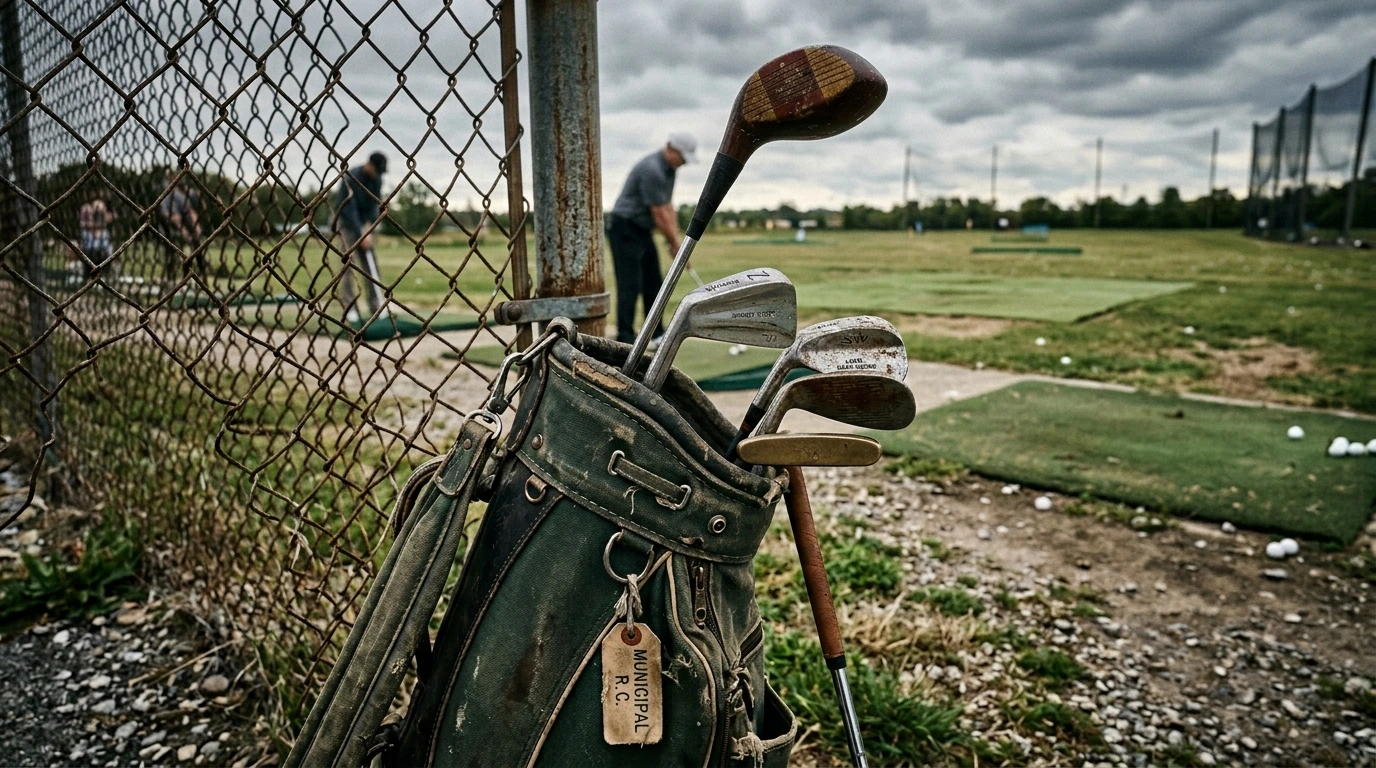
You walk into a golf store as a beginner and the wall hits you. Hundreds of clubs, shiny drivers, full sets with fourteen clubs, price tags that make your stomach drop. A staff member tells you that you need all of it, plus a fitting, plus the latest model. You leave confused, broke, or empty-handed.
Let me save you the stress. As a beginner, you need far fewer golf clubs than anyone is trying to sell you. You can start with a handful of clubs, spend little, and play just fine. The expensive full set does not make you better. Hitting balls makes you better.
This is raw golf. Here is the honest truth about golf clubs for beginners, with no sales pitch.
How Many Golf Clubs You Actually Need to Start
The rules let you carry up to fourteen clubs. You do not need fourteen. Not even close.
When you start, you miss a lot, and you have no idea how far you hit each club. A bag full of clubs you cannot use yet just adds weight and confusion. So start small. A handful of clubs covers every shot you will face as a beginner.
Here is a simple starter set that does the whole job:
- A driver or a fairway wood for your tee shots.
- A 7-iron for medium shots. This is the club you will learn with most.
- A wedge for short shots and getting out of trouble near the green.
- A putter for the green.
- One extra club if you want, like a hybrid, which is easy to hit from the fairway.
That is four or five clubs. With those, you can play a full round and learn the game. You can always add more once you know your distances and your misses.
Why a Full Beginner Set Is Usually a Waste at First
Stores love to sell you a full set of golf clubs for beginners, often fourteen clubs in a matching bag. It looks complete and it feels like the safe choice. For most new players, it is too much.
Here is the honest reason. A long iron, like a 3 or 4-iron, is hard for anyone to hit. A beginner will hit it badly and get frustrated. Half the clubs in a full set will sit in your bag untouched for your first year. You paid for clubs you do not use.
So if you do buy a set, that is fine, but use only a few of them at first. Pull out the driver, the 7-iron, a wedge, and the putter. Leave the rest in the bag until you can actually hit them. Do not feel like you must use every club just because you own it.
New or Used: Where to Spend and Where to Save
You do not need new clubs. This is the biggest money trap for beginners.
Golf clubs last for years, and the game does not change fast. A used set from a few years ago works almost as well as a brand-new one for a player who is still learning. The pro hitting it pure would notice the difference. You, as a beginner, will not.
So here is the smart order:
- Buy used or budget clubs to start. Look for a used starter set, a half set, or hand-me-downs from a friend. You save a huge amount and lose almost nothing.
- Spend a little more on the putter if anything. You use it on every hole, and a comfortable putter helps your confidence. Even here, you do not need the expensive one.
- Skip the custom fitting at first. A fitting matters once your swing settles. As a beginner, your swing changes week to week, so a fitting now is money spent too early.
- Save your real money for lessons and range balls. Those make you better. A shinier driver does not.
What to Look for in Beginner Golf Clubs
When you do pick clubs, a few simple things matter. Ignore the rest of the marketing.
Forgiveness
Beginner clubs are often called game improvement clubs. They have bigger heads and a lower, deeper weight, which helps get the ball in the air even on bad strikes. As a beginner, you want this. It is the one feature worth caring about.
The right shaft flex
Shafts come in different stiffness, called flex. Most beginners with average swing speed do well with a regular or senior flex, which helps you launch the ball. You do not need to overthink this. If you buy a beginner set, it usually comes with a flex that suits new players.
The right fit for your body
If you are taller or shorter than average, club length matters. Women's beginner sets are built lighter and shorter, which suits many players, not only women. Pick clubs that match your size so you can swing them in balance. Comfort beats brand every time.
Clubs you enjoy hitting
This one is simple but real. If a club feels good in your hands and you like hitting it, you will practice more. Practice is what makes you better. So pick clubs that make you want to play.
What This Looks Like in Real Life
Let me make it concrete.
Your first buy: You skip the wall of new clubs. You find a used starter set online or borrow one from a friend. You spend a small amount, not a small fortune. You now own a driver, a few irons, a wedge, and a putter. You are ready to play.
Your first range trip: You do not drag all fourteen clubs out. You grab your 7-iron and your wedge. You hit one ball at a time and start to learn how far each one goes. You leave knowing your clubs a little better, having spent almost nothing.
Your first round: You play with five clubs. You hit some good shots and plenty of bad ones, like every beginner. You are not slowed down by gear you cannot use. You have fun, and you want to come back.
A year later: Now you know your distances and your misses. You add a hybrid for the gaps, and maybe one more wedge. You upgrade only when a real limit shows up, not because an ad told you to.
Sharing it online: You post your cheap starter bag and the honest scores you shoot with it. People trust that far more than a sponsored gear review, because most beginners are scared of overspending too. A raw golf feed that shows the budget setup and real progress means something a gear flex never will.
You do not owe anyone a premium bag. You owe yourself enough clubs to learn and have fun.
Your One Small Step
Here is the truth about golf clubs for beginners. The gear barely matters at the start. The expensive set, the fitting, the newest driver, none of it makes you swing better when you are learning. The work is still hitting balls, slow and a little boring, the same as always. Any shop that promises clubs will fix your game is selling you something.
What the right starter clubs give you is a cheap, simple way into the game, with nothing in your way.
So try one small step before you spend big. Get your hands on a used or borrowed set, pull out just the driver, a 7-iron, a wedge, and a putter, and go play nine holes. See how little you actually need.
Do that, and you have already started buying golf clubs for beginners the raw way.