
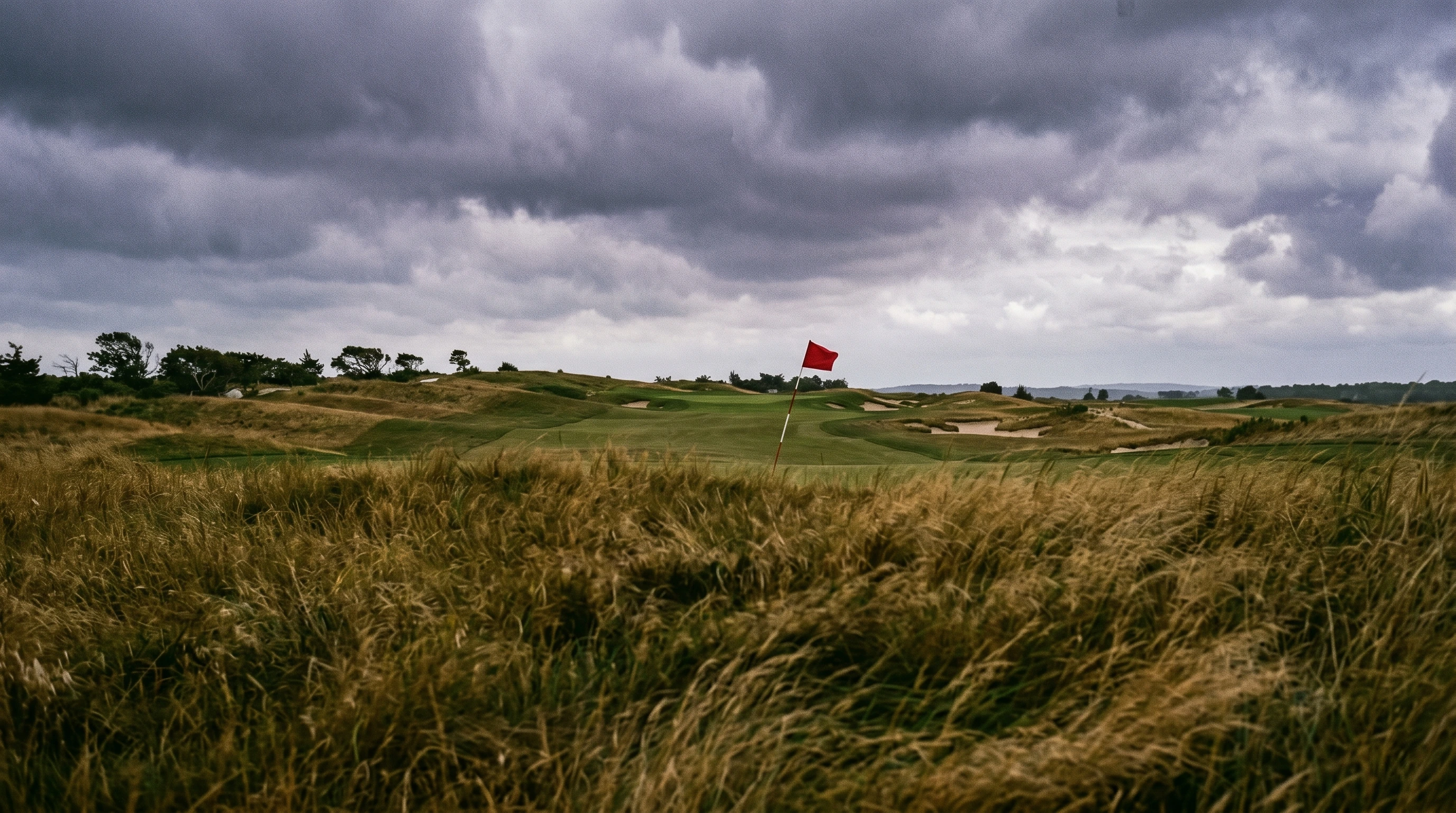
The 2026 U.S. Open starts Thursday, June 18, at Shinnecock Hills in Southampton, New York. You will hear a hundred takes this week, most of them loud and most of them empty. So let me give you the honest version. One storyline towers over the rest, the course is going to be brutal, and there is something here a normal player can actually use.
This is raw golf. No worship, no hype, just what is real about the toughest week in the game.
The 2026 U.S. Open Has One Story Bigger Than the Rest
Scottie Scheffler can complete the career Grand Slam this week. That is the headline, and it is a big one.
He has already won the Masters, the PGA Championship, and the Open Championship. The U.S. Open is the only major he has never lifted. Win at Shinnecock and he joins one of the smallest clubs in golf. Only six men have ever won all four majors in a career, and Rory McIlroy was the most recent, breaking through at the 2025 Masters. Scheffler would be the seventh.
There is a twist that makes it better. The final round on Sunday lands on Scheffler's 30th birthday. You cannot script that.
Here is the honest part, though. The U.S. Open does not care about your story. It is the hardest test in golf, and the player who wants it most does not always get it. Scheffler is the favorite for good reason, but Shinnecock has wrecked plenty of favorites before. Watch with interest, not certainty.
Why Shinnecock Hills Is So Brutal
You need to understand the course to understand the week. Shinnecock is not a birdie party. It is a grind.
This is the sixth U.S. Open held here, and the place has a reputation. The last time the championship came to Shinnecock, in 2018, not a single player finished under par for the week. Brooks Koepka won at one over. Think about that. The best players on earth, and the winning score was above par.
A few things make it so hard:
- The wind. The course sits between a bay and the Atlantic, so the wind shifts and punishes anything loose.
- The fairways and rough. Miss the short grass and you pay. The U.S. Open setup is famous for thick rough that turns a small miss into a big number.
- The greens. Firm, fast, and tilted. A shot that lands fine can still bounce away into trouble.
So this week is less about who hits it the prettiest and more about who survives. The winner will not overpower Shinnecock. The winner will out-last it.
The Other Real Storylines at the 2026 U.S. Open
Scheffler is the main act, but he is not the only one worth your time. A few other things are genuinely interesting.
Rory McIlroy is chasing more history
McIlroy already owns the season's first major. He won the 2026 Masters for the second year in a row, one stroke ahead of Scheffler, becoming just the fourth player to win back-to-back green jackets and the first to do it since Tiger Woods in 2001 and 2002. He arrives at Shinnecock playing some of the best golf of his life. If anyone can spoil Scheffler's party, it is him.
Aaron Rai is the champion nobody saw coming
The PGA Championship in May gave us a surprise. Aaron Rai, a 31-year-old Englishman, won his first major at Aronimink, beating Jon Rahm and Alex Smalley by three. He became the second player of Indian heritage to win a men's major, after Vijay Singh, and the first Englishman to win the PGA Championship in more than a century. He was not a household name. Now he is a major champion, and he tees it up this week with nothing to prove and nothing to lose. That is dangerous.
J.J. Spaun defends his title
Do not forget the defending champion. J.J. Spaun won last year's U.S. Open at Oakmont with a 64-foot birdie putt on the final hole, one of the wildest finishes in recent memory. Defending a U.S. Open is hard, but he has already shown he can handle the moment.
No Tiger, no Phil
For the casual fan, one note. Tiger Woods and Phil Mickelson are not in the field this week. The era keeps turning, and the names at the top are mostly new ones now.
What a Normal Player Can Actually Learn From the 2026 U.S. Open
Here is where most golf coverage fails you. It treats the pros like gods and gives you nothing to use. So let me flip it. You will not swing like Scheffler. You will never see Shinnecock's greens. But you can steal a few real lessons from how these players handle the hardest week of the year.
- Watch how they miss. The best players miss in the right spots, away from the worst trouble. You can do the same. Aim for the safe side of the green, not the flag.
- Watch how they manage a bad hole. A pro makes a bogey and moves on. No meltdown, no chasing it back with a hero shot. Copy that calm. It will save you more strokes than any swing tip.
- Watch the lay-ups. When the carry is too risky, even the best players take the safe route. If they can swallow their ego at a major, you can do it at your weekend round.
"Ignore the swings, study the decisions. Trying to copy a pro's swing on TV will wreck yours. But copying their patience and their course strategy costs you nothing and helps right away."
That is the raw golf way to watch a major. Not as a fan staring at a perfect highlight, but as a player picking up one real habit you can use on Saturday.
Your One Small Step
Here is the truth about the 2026 U.S. Open. It is going to be hard to watch in the best way, full of great players struggling against a course that does not bend. Someone will handle it better than the rest, and by Sunday night we will know if Scheffler finished his Grand Slam or if the course had other plans.
You do not need to predict the winner. You need to take one thing from the week.
So try this. Pick one player you like and watch only how they handle their first bad shot. Not the swing, the reaction. See how fast they let it go and move to the next shot. Then bring that exact calm to your next round.
Do that, and you turned a week of watching golf into one real lesson, the raw golf way.